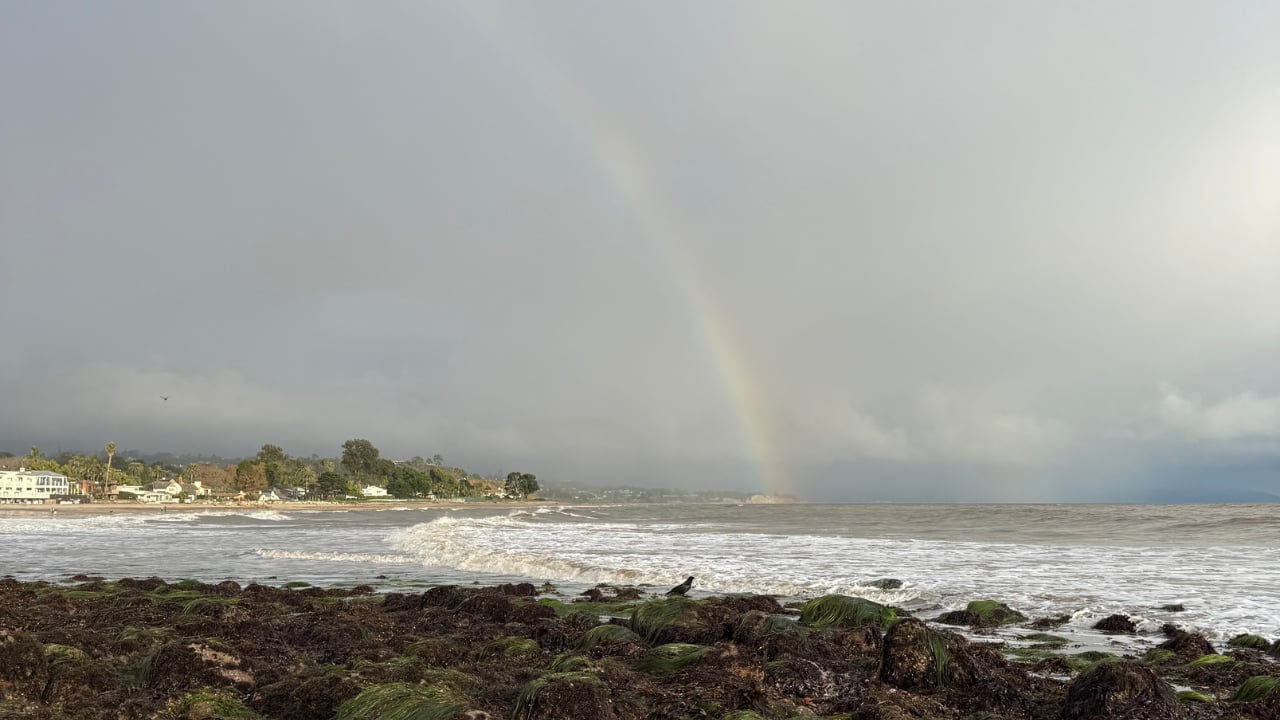
There is a strong possibility of El Nino this winter. On the coast we can expect higher tides and bigger waves. More rain and flooding are also possible. Don't panic. Prepare.
Living in Santa Barbara means enjoying some of the most beautiful weather in the country, but our winter storms can occasionally remind us just how important it is to understand how water moves around a property.
Whether you live near a creek, along the coast, on a hillside or simply in a home with mature trees and older drainage, a little preparation before the rainy season can go a long way.
Here are seven things Santa Barbara homeowners can do now to help prepare their homes for heavier rain.
- Start at the Roof
Your roof is your home's first line of defense during a storm. Before the rainy season begins, clean out gutters and downspouts and check for damaged roofing, loose tiles, deteriorated flashing, or other areas where water may be able to enter.
It is also worth looking at where your downspouts discharge. Ideally, rainwater should be directed away from the foundation rather than collecting alongside the house.
- Clear Your Drains
Leaves, dirt, pine needles, and landscaping debris can quickly block yard and driveway drains.
Take a walk around your property and clear drainage grates, channels, and swales before the first major storm.
Then, after we receive our first meaningful rain, take another look.
Are there areas where water is pooling? Is water moving toward the house or garage instead of away from it? Are any drains struggling to keep up?
Sometimes the best way to understand a property's drainage is simply to watch what happens when it rains.
- Know Your Creek Risk
Santa Barbara County has numerous creeks running from the mountains toward to ocean, including several that pass directly through residential neighborhoods.
If you live near a creek or drainage channel, understand where your home sits in relation to the surrounding terrain.
A property does not necessarily need to have a creek running through the backyard to be affected by runoff during an unusually heavy storm.
Keep drainage areas clear, but avoid modifying a creek channel, embankment, or natural drainage course without professional guidance and any required approvals.
- Consider Coastal Exposure
For homes close to the ocean, winter weather can involve more than rainfall.
Large Pacific swells, high tides, saturated soil, and repeated storms can contribute to coastal flooding, erosion, and bluff instability.
This is particularly important for bluff top and oceanfront properties in areas such as Summerland, Montecito, Santa Barbara, and Carpinteria.
If you own a coastal property, pay attention to both storm forecasts and surf conditions during the winter months.
- Check Your Flood Zone
Even if you have looked up your property before, it is worth checking its current FEMA flood designation.
Flood maps can change over time, and every property has its own combination of elevation, drainage, topography, and surrounding conditions.
It is also important to remember that being outside a mapped high risk flood zone does not mean flooding is impossible.
Localized drainage problems, overflowing creeks, blocked culverts, and intense rainfall can affect properties outside traditional flood zones.
A link to the updated FEMA flood map: https://santabarbaraca.gov/FEMA-Mapping
- Review Your Insurance
One of the most important things homeowners can do before winter is understand exactly what their insurance covers.
Standard homeowners insurance generally does not cover flooding caused by rising or surface water.
If your home is near a creek, drainage area, coastline, or another location with potential flood exposure, speak with your insurance professional about your coverage and whether separate flood insurance makes sense for your property.
This is something you want to understand before a major storm appears in the forecast.
- Prepare Before the Storm
If you already know your property has areas that are vulnerable during heavy rain, prepare ahead of time.
Consider having appropriate sandbags or temporary flood barriers available. Test sump pumps and make sure they are functioning properly. If a sump pump is critical to keeping your home dry, consider what would happen if the power went out.
Think about where you would move vehicles, outdoor furniture, equipment, and valuable items if a major storm were approaching.
And make sure you are signed up for local emergency alerts so you receive important information quickly.
Sign up for ReadySBC Alerts: https://www.readysbc.org/
Don't Panic. Prepare.